What monitor works well with rtx 5090 uae?
The right monitor can make a powerful graphics card feel even more impressive. Whether you enjoy competitive shooters, open-world adventures, racing simulators, or cinematic single-player games, your display determines how clearly and smoothly you experience every moment. Choosing the right screen is particularly important when investing in a high-end graphics card because a basic monitor may prevent you from enjoying its full capabilities. 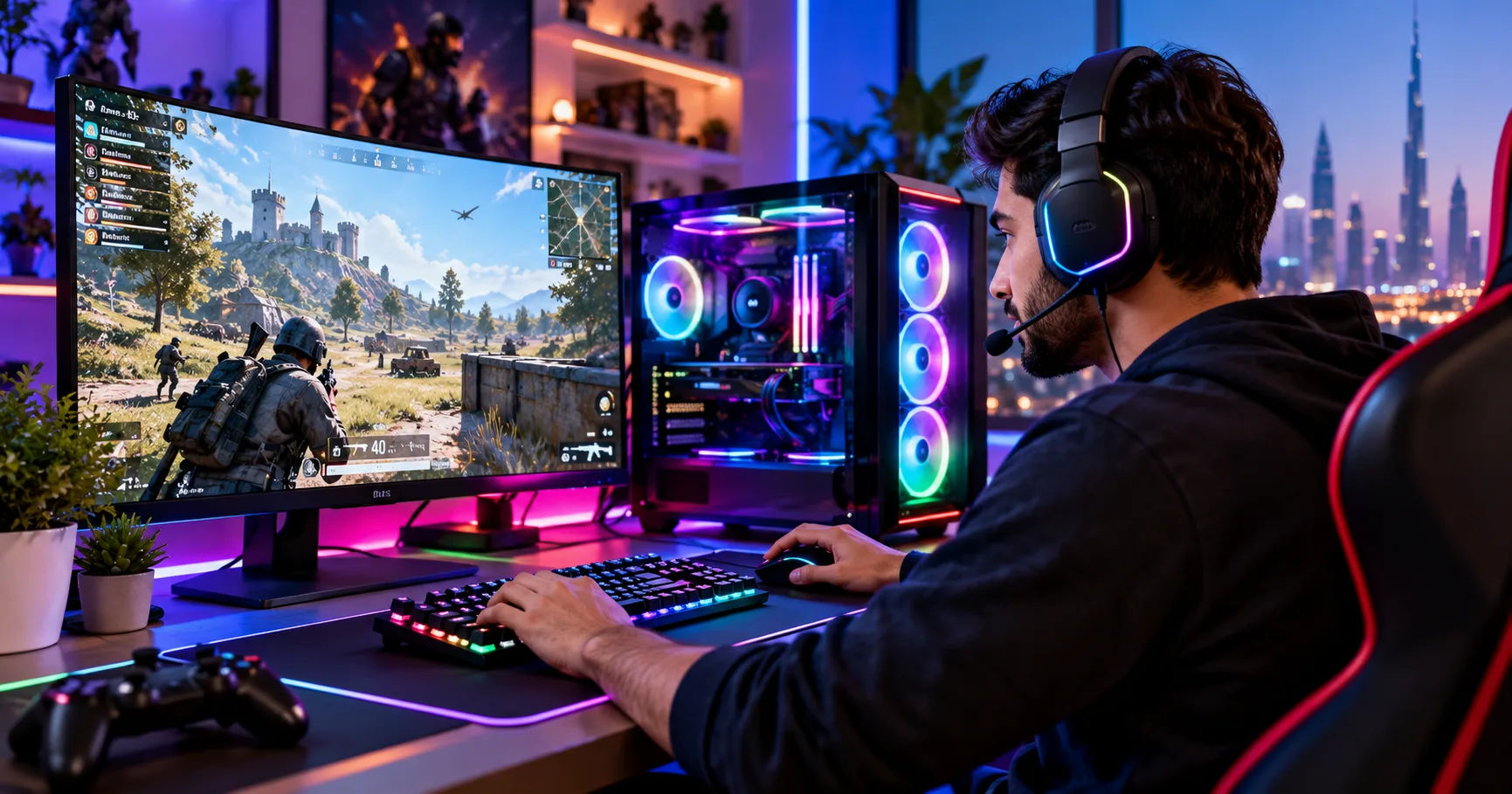 The rtx 5090 uae is an excellent option for gamers who want outstanding graphics performance, high frame rates, and advanced visual features. However, pairing this powerful GPU with a suitable monitor requires more than simply choosing the most expensive screen available. You need to consider resolution, refresh rate, panel technology, response time, connectivity, screen size, and your gaming preferences.
In the United Arab Emirates, buyers can explore several monitor categories, from fast 1440p displays to premium 4K OLED screens and expansive ultrawide monitors. The best choice depends on whether you prioritize competitive performance, realistic visuals, immersive gameplay, or a balanced experience that supports both gaming and everyday productivity.
This comprehensive guide explains which monitors work well with the RTX 5090, which specifications matter most, and how to choose a display that delivers excellent value for your gaming setup.
The Capabilities of the RTX 5090
Before selecting a monitor, it helps to understand what makes this graphics card suitable for high-end gaming.
The NVIDIA GeForce RTX 5090 is a flagship desktop graphics card built on the Blackwell architecture. It is designed for demanding workloads, including high-resolution gaming, ray tracing, content creation, and AI-assisted graphics features.
Its substantial processing power makes it especially attractive to gamers who want to play modern titles at high settings without compromising image quality.
Why Monitor Selection Matters
A graphics card generates frames, while a monitor displays them. Both components influence the final gaming experience.
For example, a 4K monitor provides more image detail than a 1080p display, while a high-refresh-rate monitor can show more frames each second. A display with poor response characteristics may also introduce visible ghosting during fast movement.
The rtx 5090 uae can support a premium display setup, but the performance you experience depends on the game, graphics settings, resolution, and other system components.
A powerful GPU does not automatically guarantee maximum frame rates in every game. Some titles are limited by the processor, game engine, or software optimization. Demanding ray-tracing effects can also reduce performance, even with high-end hardware.
What Should You Prioritize?
For most enthusiasts, the most important monitor specifications are:
-
Resolution: Determines image sharpness and detail.
-
Refresh rate: Measures how many times the display updates per second.
-
Response time: Influences how quickly pixels change between colors.
-
Panel technology: Affects contrast, colors, brightness, and motion clarity.
-
Adaptive synchronization: Helps reduce screen tearing and stuttering.
-
Connectivity: Determines whether the monitor can receive the desired resolution and refresh rate.
-
Screen size: Influences immersion, viewing distance, and desk requirements.
The best monitor balances these characteristics instead of maximizing just one specification.
Best Monitor Types for the RTX 5090
Different monitor technologies offer different advantages. These are the main categories worth considering when building a high-end gaming setup.
1. 4K 240Hz OLED Monitors: Best Overall Choice
For most enthusiasts, a 32-inch 4K OLED monitor with a 240Hz refresh rate is the strongest all-around choice. It combines excellent image detail, fast pixel response, deep blacks, and fluid motion.
OLED technology allows individual pixels to switch off completely when displaying black. This creates outstanding contrast, making nighttime environments, dark interiors, and space scenes look particularly impressive.
A 240Hz refresh rate is also excellent for competitive games. You can enjoy responsive gameplay without giving up the image quality that makes demanding modern titles attractive.
One monitor worth considering is the ASUS ROG Swift OLED PG32UCDM. It combines a 4K resolution with a 240Hz refresh rate and QD-OLED technology. Other options include comparable 4K OLED models from MSI and Samsung. Check the specifications of the exact version before purchasing.
Best for: Enthusiasts who play a mixture of competitive games, cinematic adventures, and graphically demanding titles.
The main disadvantages are the higher purchase price and the possibility of OLED burn-in after prolonged exposure to static elements. Modern OLED monitors include protective features, but warranty coverage should still be checked.
2. 4K 144Hz to 165Hz IPS Monitors: A Practical Alternative
Not everyone needs an OLED panel or a 240Hz refresh rate. A good 4K IPS monitor running at 144Hz or 165Hz can provide detailed images, smooth motion, and dependable everyday performance.
IPS displays often provide consistent colors and wide viewing angles. They are particularly useful for people who edit photographs, create videos, work with documents, or use the same computer for gaming and professional tasks.
They can also be a sensible choice for bright rooms, although brightness and reflections vary by model.
Compared with OLED, many IPS monitors have weaker native contrast and less impressive dark-room HDR performance. However, they generally avoid the same OLED burn-in concerns.
Best for: Gamers who want sharp 4K graphics, productive multitasking, and a more flexible display budget.
3. 1440p 360Hz Monitors: Best for Competitive Gaming
Competitive players often prioritize speed over maximum resolution. If you mainly play Counter-Strike 2, Valorant, or other fast-paced multiplayer games, a 1440p monitor with a 300Hz or 360Hz refresh rate can be an excellent option.
At 1440p, the graphics card has fewer pixels to render than at 4K. This can make it easier to achieve very high frame rates, depending on the game and CPU.
The higher refresh rate makes fast movement easier to follow, while a responsive panel can help reduce motion blur. These benefits are particularly noticeable when tracking opponents or making rapid camera movements.
However, a 360Hz monitor is most useful when your system can deliver frame rates high enough to benefit from it. It is not necessary for everyone, especially those who prefer slower-paced games.
Best for: Esports enthusiasts, competitive multiplayer players, and users who prioritize responsiveness.
4. Ultrawide Monitors: Best for Immersive Gaming
Ultrawide monitors provide a wider field of view than conventional 16:9 screens. They are especially appealing for racing simulators, flight simulators, exploration games, and productivity.
A 34-inch ultrawide monitor with a 3440 × 1440 resolution provides additional horizontal space without requiring the same pixel count as a 4K display.
Larger 49-inch super-ultrawide screens can offer an even more immersive experience. They are also useful for keeping multiple windows open side by side.
The drawback is that not every game supports ultrawide aspect ratios equally well. Some titles may display black bars, crop the image, or limit the field of view.
Best for: Simulation enthusiasts, immersive single-player gaming, and multitasking.
5. Dual-Mode OLED Monitors: Best for Mixed Gaming
Dual-mode monitors are an interesting option if you play both demanding single-player games and competitive esports titles.
Depending on the model, a dual-mode screen can operate at 4K with a refresh rate of 240Hz and switch to Full HD at 480Hz. This allows you to prioritize image detail for cinematic games and maximum refresh rate for competitive play.
The LG UltraGear 32GS95UE-B is one example of this approach. Its dual-mode capability makes it appealing to gamers who do not want to choose between high-resolution gaming and extremely fast refresh rates.
The trade-off is that switching to Full HD reduces image detail. You should also compare the monitor's input options, HDR performance, and current local pricing before making a decision.
Which Resolution Should You Choose?
Resolution has a major influence on how your games look and how demanding they are to render.
|
Resolution |
Main advantage |
Best use |
|---|---|---|
|
1920 × 1080 (Full HD) |
Lower rendering workload |
Competitive gaming on smaller screens |
|
2560 × 1440 (1440p) |
Strong balance of sharpness and speed |
Esports and general gaming |
|
3840 × 2160 (4K) |
Excellent image detail |
Premium gaming and cinematic visuals |
|
3440 × 1440 (ultrawide) |
Wider field of view |
Racing, simulation, and immersive gaming |
|
5120 × 2160 (5K2K ultrawide) |
High detail with an expansive workspace |
Premium simulation and productivity |
For most people buying a flagship graphics card, 4K is the best starting point. It offers a substantial visual improvement over 1440p while making good use of the GPU's high-end rendering capabilities.
That does not mean every game will run at 240 frames per second at 4K. Performance depends on the title, graphics settings, ray tracing, and whether technologies such as DLSS and frame generation are enabled.
The graphics card supports display output up to 4K at 480Hz or 8K at 165Hz using Display Stream Compression, subject to the appropriate connection and display support. These figures describe display capability, not guaranteed gaming frame rates.
Important Features to Check Before Buying
DisplayPort and HDMI Compatibility
A monitor must support the resolution and refresh rate you want through the input you intend to use.
The RTX 5090 supports DisplayPort 2.1b and HDMI 2.1b on the reference design. Some monitors offer DisplayPort 2.1 with high bandwidth, while others rely on DisplayPort 1.4 and Display Stream Compression for demanding modes.
Check the precise monitor specifications rather than assuming that every DisplayPort 2.1 monitor supports the same bandwidth.
Use a suitable certified cable and connect the display directly to the graphics card. After setup, select the monitor's native resolution and maximum supported refresh rate in your operating system.
Adaptive Sync and G-SYNC Compatibility
Adaptive synchronization helps the monitor match its refresh rate to the frames produced by the GPU. This can reduce screen tearing and improve smoothness when frame rates fluctuate.
Look for NVIDIA G-SYNC support or G-SYNC compatibility, and verify which variable-refresh features work over the connection you plan to use.
This is especially useful in demanding games where maintaining a perfectly fixed frame rate is difficult.
HDR Performance
High Dynamic Range can improve highlights, color depth, and the sense of contrast in supported games.
However, an HDR label alone does not guarantee excellent image quality. Look at real brightness performance, contrast, local dimming capabilities, and independent reviews. OLED monitors often deliver excellent contrast, while some LCD monitors with effective local dimming can produce impressive highlights.
Warranty and OLED Protection
For OLED models, check whether the manufacturer's warranty explicitly covers burn-in. Also look for pixel-refresh routines, logo dimming, and other panel-care features.
These precautions are particularly important if you regularly leave a desktop taskbar, game interface, or productivity application visible for many hours.
Buying an RTX 5090 Monitor in the UAE
When shopping for a monitor in the UAE, compare the total cost, warranty terms, and availability of the exact model. Premium OLED monitors can vary considerably in price depending on the manufacturer, panel generation, and connectivity options.
If you are building a system around the rtx 5090 uae, consider checking established electronics retailers, authorized brand distributors, and reputable UAE computer stores. Compare prices in AED and confirm whether the product includes a local warranty.
Before placing an order, review these points:
-
Warranty: Confirm the length of coverage and whether the warranty is valid in the UAE.
-
Returns: Check the retailer's dead-pixel policy and return period.
-
Connectivity: Make sure the supplied cable supports your intended resolution and refresh rate.
-
Desk space: Measure the available width and depth, particularly for 32-inch and ultrawide displays.
-
Power and heat: Consider ventilation and the room environment when planning your entire PC setup.
-
Availability: Verify stock and delivery estimates for the exact model number.
The rtx 5090 uae is powerful enough to justify investing in a quality display, but buying an expensive monitor without checking these details can lead to unnecessary compromises.
How Much Should You Spend?
Your budget should reflect how you use your computer rather than the price of the graphics card alone.
A high-quality 1440p monitor may be sufficient for competitive gaming. A 4K IPS monitor can be a sensible middle ground for gaming and productivity, while a 4K 240Hz OLED model is better suited to enthusiasts who want premium image quality and responsiveness.
For many buyers, the best strategy is to choose a monitor that meets their actual needs and retain some budget for accessories, a suitable desk, and other system components.
Recommended Monitor Specifications at a Glance
|
Your priority |
Recommended specification |
|---|---|
|
Best overall gaming |
32-inch, 4K, 240Hz OLED |
|
Competitive esports |
27-inch, 1440p, 360Hz |
|
Gaming and productivity |
27–32-inch, 4K, 144–165Hz IPS |
|
Immersive simulation |
34-inch or larger ultrawide |
|
Competitive and cinematic games |
Dual-mode OLED |
|
Bright room and long desktop sessions |
A suitable high-quality IPS or well-reviewed OLED display |
These are starting points rather than rigid rules. Compare individual models because response behavior, HDR quality, brightness, and connectivity can differ even between monitors with similar headline specifications.
Conclusion
Choosing the right monitor for a flagship graphics card is about finding the right balance between image quality, speed, comfort, and price. The best display should complement your gaming habits instead of simply offering the highest specifications on paper.
For most enthusiasts, a 32-inch 4K OLED monitor with a 240Hz refresh rate is the strongest all-around recommendation. It combines detailed visuals, impressive contrast, responsive gameplay, and enough refresh-rate headroom for competitive titles. The ASUS ROG Swift OLED PG32UCDM and comparable premium OLED models are worth comparing when researching your options.
If competitive gaming is your main priority, a 1440p 360Hz monitor may be more appropriate. Players who prefer cinematic experiences and simulation games may benefit more from an ultrawide display, while those who need a versatile screen for work and gaming can consider a high-refresh 4K IPS model.
When purchasing the rtx 5090 uae setup, pay particular attention to DisplayPort and HDMI specifications, adaptive synchronization, HDR quality, and warranty coverage. These details can make a meaningful difference to your everyday experience.
Ultimately, the rtx 5090 uae pairs especially well with a high-quality 4K 240Hz display, provided that the monitor suits your desk, budget, and preferred games. Choose carefully, verify the specifications of the exact model, and prioritize the features you will actually use. With the right combination, you can enjoy sharp visuals, smooth motion, and an immersive gaming experience without spending money on features that offer little benefit to your needs.
About The Author
