20 TOP SUGGESTIONS FOR DECIDING ON EMERGENCY LIGHT TESTING IN WALSALL
Top 10 Tips On How To Determine The Frequency Of Testing PAT in Walsall
The UK's health and safety laws make it difficult for duty holders to determine the right frequency of Portable Appliance Testing. Contrary to widespread misconception, there is no mandated statutory interval–such as an annual requirement–specified in the Electricity at Work Regulations 1989. Instead, Regulation 4(2) imposes a general duty to maintain electrical systems to prevent danger, placing the legal onus on the employer or responsible person to establish a suitable maintenance regime through a structured risk assessment. This risk-based approach, strongly endorsed by the Health and Safety Executive (HSE), moves away from blanket testing schedules and requires a reasoned, documented justification for all inspection and testing intervals. The frequency is determined by evaluating what type of equipment it is, the operating environment in which it operates, who uses it, and how long ago that was.
1. Risk Assessment Has Absolute Priority
The frequency for testing is not dictated by law. However, the dutyholder must conduct a sufficient and appropriate risk assessment. This document is the basis for your PAT test regime. It should consider all factors that may cause an electrical appliance to be dangerous and decide how often that appliance needs to be tested or inspected in order to mitigate the risk. HSE inspectors expect to see such an assessment and will evaluate the frequency of testing in relation to its conclusions. A testing schedule without this assessment is potentially non-compliant.
2. Key Factors Influencing Testing Intervals
To determine an acceptable frequency, the risk assessment should evaluate systematically several key factors. These include: Type of Equipment: Class 1 appliances (e.g. toaster ovens, kettles), which are earth-dependent, require more frequent checks than Class 2 (double-insulated appliances). Environment: A harsher environment (such as on a building site, in a workshop, or in a commercial cooking area) calls for more frequent checks. Users: If the equipment is being used by a trained employee, it may need to be tested less frequently than if it's being used by a public or untrained personnel. Appliance construction: More robust equipment is less likely to be a risk. Prior History: Appliances with a fault history will need more frequent checks.
3. The Critical Role of Formal Visual Inspections
Formal visual inspections can be a legal part of the maintenance program and are often more valuable than inspections and testing combined. They can detect most faults including cable damage, loose connectors, casing damages, and contamination. A formal visual inspection performed by a qualified person in a low-risk environment (such as a desktop PC in an office) may be sufficient for many appliances. Routine electronic testing is not required. The frequency of these formal visual checks is also determined by the risk assessment.
4. User Checks and First-Line Maintenance
The first line of defense is the user check. The dutyholder needs to ensure that users perform a basic visual check before use for obvious damage signs, such as frayed wires, burn marks and loose parts. Although not part of the formal system of PAT, promoting user awareness can be a vital part of an holistic risk-based strategy and help identify issues between scheduled formal inspections.
5. Guidance from the IET Code of Practice
It is important to note that the IET Code of Practice does not constitute law. However, it offers valuable guidance as to recommended first frequencies. It provides a table that suggests intervals for equipment in different environments (e.g. industrial, commercial and public). Dutyholders can use this table as a robust starting point for their risk assessment. It might, for example, suggest that equipment on a building site be visually inspected every three months but IT equipment in a office is inspected at intervals of 24 months. These recommendations are preliminary and will be modified according to actual experience.
6. The Concept of "Result-Based" Frequency Scheduling
In order to be truly sophisticated and compliant, future testing frequency should be adjusted based on previous results. The risk assessment can then be reviewed in order to justify an increase in the testing interval if an appliance or category of appliances consistently passes their tests without error over a period of several years. In contrast, if an appliance type is prone to failure, the interval can be shortened. Enforcing authorities look favourably on this dynamic approach based on evidence.
7. New Appliances and Equipment
A common misconception is that all new equipment must be tested. It may not require a formal combined testing before the first use but a visual inspection will still be required to check the equipment for transit damage, the correct wiring of the plug and its suitability for the UK (e.g. a properly fused plug). The risk assessment will determine the first test date for new equipment, integrating it into the existing maintenance schedule.
8. Renting or Borrowing Equipment
Equipment brought onto the premises, such as hired tools or equipment used by contractors, must be included in the PAT system. The dutyholder is responsible for ensuring that the equipment is safe to use. Such equipment is usually subject to conservative risk assessments, which require an inspection and testing immediately before the first use.
9. Documenting the Justification for Frequencies Chosen
Compliance is demonstrated through documentation. The risk assessment must not only state the chosen frequency for each type of appliance but must also record the rationale behind that decision. This document serves as proof of "due diligence." It should mention the factors taken into consideration (environment, users, equipment types) and, when applicable, refer to IET Code of Practices or the results of past testing history in order to justify intervals.
10. Reviewing and Adjusting Intervals on a Regular Basis
The risk assessments and test frequencys that they prescribe are not static. Regulation 4 of 1989 Electricity at Work Regulations requires that maintenance be carried out continuously. The dutyholder must formally review the risk assessment and the effectiveness of the testing intervals on a regular basis (e.g., annually) or after any significant change, such as a near-miss incident, a change in equipment, or a change in the working environment. The system will remain effective and proportionate. Read the recommended Walsall portable appliance testing for site recommendations including fire extinguisher for an electrical fire, fire electrical extinguisher, fire extinguisher, testing a fire extinguisher, fire extinguisher fire, fire extinguisher, fire extinguisher service Walsall, fire extinguisher fire, extinguisher service, fire extinguisher for an electrical fire and more..
Top 10 Tips For Emergency Support Fire Extinguisher Services in Walsall
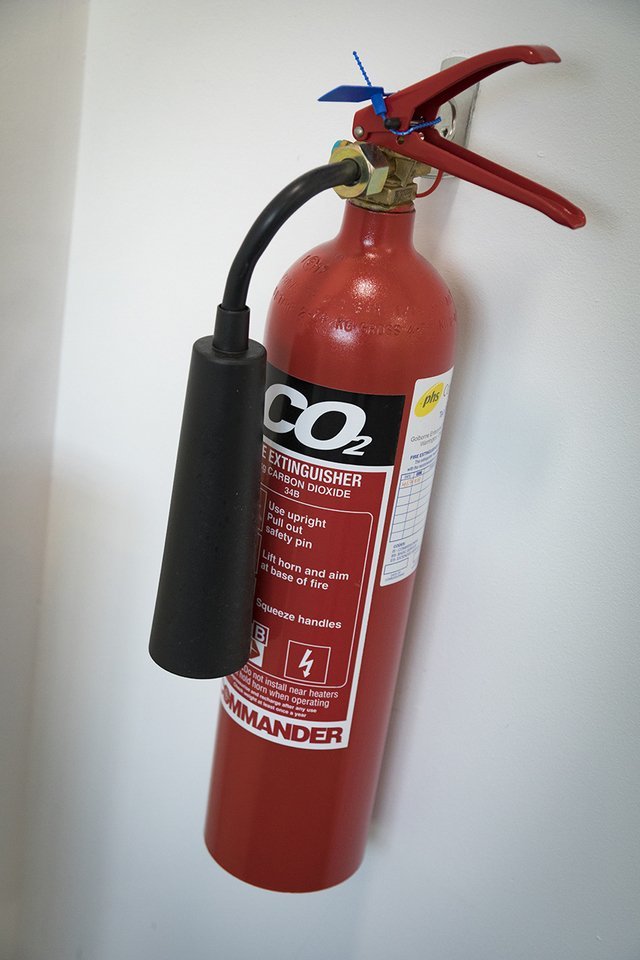
The frontline of fire safety compliance is where theoretic protocols have practical application. In the Regulatory Reform (Fire Safety) Order of 2005 The Responsible Person is required to have an obligation to continue to maintain all equipment used to fight fires in a functioning condition which means that any equipment malfunction damage, discharge, or even damage creates an immediate compliance gap that needs to be addressed with urgency. The emergency support services don't just add convenience, but are a vital part of a comprehensive strategy for fire safety. They directly affect the management of risks, the validity of insurance and the operational continuity. A provider's emergency response capability–encompassing availability, communication, technician competence, and logistical readiness–reveals their true commitment to client safety beyond routine maintenance. Evaluating these provisions requires careful examination of the service level agreements, geographical coverage limitations, as well as the real-world application of the promise times for response in actual situations.
1. 24/7/365 accessibility and dedicated emergency contact channels in Walsall
Genuine emergency support requires uninterrupted availability. This is why you need a dedicated emergency contact number that is available 24 hours a day, every day of the year, which includes all holidays that are public. It should not be a normal office number that goes to voicemail during business hours and should be a hotline that is which is monitored by an active coordinator who is capable of dispatching engineers right away. The service's out-of-hour call handling protocol must be clear and ensure that all reported emergencies are not unanswered the next business morning which leaves your business insecure and not compliant.
2. A specific and contractually agreed upon response time promises in Walsall
Vague promises of a "rapid response" are meaningless without contractual promises. The Service Level Agreement must include clear and precise response levels. In this case, for example: Priority 1 (critical problem that affects more than one unit) Engineer sent to site within four working hours. Priority 1 (Single unit not present or not discharged). Site attendance within 24 hours. The SLA should clearly define these tiers, depending on the potential risk associated, and provide consequences of being consistently missed. For instance, you could have credit for service or termination rights. This makes a promise enforceable.
3. Local Engineers and Geographic Coverage Deployment
The only way to ensure that is through geographic logistics way to ensure prompt response. A national provider will need a strategically dispersed network engineers to cover local areas. The availability and Walsall of engineers is essential. There is a possibility for a service to meet the 4-hour target if they have engineers in their area or in their city. Understanding their deployment strategy is critical to assessing the extent to which their responses will be.
4. Scope of Emergency Services: Assessment, Repair, and Replacement in Walsall
An extensive emergency response is required. The scope of the service should encompass immediate evaluation on the spot and the capability to carry out repairs with the help of carried stock (seals and hoses, as well as pressure cartridges) and, more importantly, the immediate replacement of destroyed or damaged extinguishers in a well-stocked van. It is not sufficient to arrange for an engineer to desecrate the equipment and then leave. This will require another visit days later for the replacement. It can leave the asset exposed and non-compliant premises for an extended period. True emergency support solves the issue on the first visit.
5. The Loan Equipment is During the Resolution Period in Walsall
For more complex issues that can't be fixed in a timely manner (e.g. special equipment that requires ordering) an emergency support service will offer equipment for loan. This ensures that the fire cover is maintained throughout the resolution and demonstrates a provider's dedication to your conformity. It must be stated clearly whether there is a charge. What is the loan period? How is the equipment loaned monitored and managed? This service is even more essential in areas with a lot of risk, like those where leaving fire points empty isn't an option.
6. Protocols for communication and proactive updates in Walsall
In the event of an emergency, clear communication is essential. It is imperative that protocols are followed by the provider, including an acknowledgment of the initial call, an estimate of the when the engineer will arrive engineer, and notification once the engineer arrives on site. After the visit, a service report detailing the fault action taken, along with any parts that need to be replaced, must be promptly issued. The report is a vital document for your compliance files as well as any communications with insurance companies.
7. Transparency of Emergency Call-Out Prices in Walsall
The cost for emergency calls should be clear and unambiguous to avoid misunderstandings. The contract, also known as a price list should clearly define the price for the call-out in case of an emergency, as well as the cost of any additional charges due to nights weekend, weekdays, and bank holidays. It should distinguish between the call-out fee (a fixed dispatch charge) as well as the additional cost for labor as well as replacement parts and units. No ambiguity should exist. Best practice is to negotiate these costs as part of the contract in general. You will then know the exact price before you have to call for an emergency.
8. Competencies and qualifications of Emergency Response Engineers
Emergency engineers must be among the top trained and experienced technicians, not junior staff working on a rota. They should be able to diagnose and solve a large number of problems quickly and accurately under pressure. They must be trained in advanced areas like the FIA Unit 010 – Overhaul of Portable Fire Extinguishers and have plenty of expertise. Verify if the service provider has a team or specialists that are certified for an emergencies to ensure the responder will be able to match your speed.
9. Integrating Alarm Monitoring and Facilities Management Systems
Emergency support systems must be integrated seamlessly into existing building management system for large sites or high-risk premises. This means providing contact details directly to alarm receiving centres (ARCs) to ensure that any faults detected during automated monitoring could be immediately reported to the service provider. The provider must also be able work with your internal facilities management team to follow procedures for access to the site and send updates to the duty manager who is responsible for it.
10. Reconciliation of compliance and follow-up for after-hours emergencies in Walsall
The emergency services are not complete once the engineer leaves. The company is accountable for initiating a formal follow-up process to ensure that the incident is completed within your records. This might include: issuing an official certification for the new equipment installed, updating your asset register and initiating a fire risk assessment review to determine whether the incident suggests that there are larger issues (e.g. repeated vandalism which requires a certain amount of control). This process is closed to ensure that the emergency solved technically, but it's also been dealt with administratively. Follow the top fire extinguisher servicing in Walsall for site advice including fire service fire extinguisher, fire extinguisher for an electrical fire, extinguisher service, extinguisher fire extinguisher, electrical fire, electrical fire extinguisher, fire extinguisher for an electrical fire, extinguisher company, extinguisher service, extinguisher fire extinguisher and more. More broadly, read the top rated fire extinguisher inspection for more.
About The Author
